Showing posts sorted by relevance for query King of Bhutan. Sort by date Show all posts

Saturday, 15 December 2007

Monarchy&Government

Prior to the establishment of the monarchy, Bhutan followed a dual system of administration initiated in 1652 by Zhabdrung Ngawang Namgyal. Under the Chhoesi system, the Druk Desi looked after the temporal administration and the Je Khenpo looked after religious matters of the country. Although this form of government worked over two centuries, disputes over the succession to the office brought about increasing strife and instability by the second half of the 19th century.

The First and Second King of Bhutan
A new era in the Bhutanese history began on the 17th December 1907, when Trongsa Penlop (the Governor of Trongsa) Ugyen Wangchuck was elected as the first hereditary king of Bhutan. It was a decision taken unanimously by the clergy, officials, and people acting on their desire for political stability and internal peace in the country. Thus, King Ugyen Wangchuck laid the foundation for the emergence of modern Bhutan, uniting it under a central authority.
The nation continued to enjoy peace and stability under the reign of the second king Jigme Wangchuck who succeeded him in 1926 and ruled the country till 1952.


The Third King - His Majesty Jigme Dorji Wangchuck
After his ascension to the throne in 1952, the third king Jigme Dorji Wangchuck took the initiative of developing political consciousness among the Bhutanese people by giving them a greater say in running the country. This was most evident in the establishment if the National Assembly by the king in 1953, and later still, when his majesty voluntarily surrendered the right to veto bills in the Assembly. King Jigme Dorji Wangchuck also proposed a mechanism of no-confidence vote that could require the king to abdicate his throne if he was deemed unfit to rule the nation. This, however, was met with a great deal of objection and resistance in the Assembly. Upon yet another recommendation on this issue from the king in 1969, the Assembly reluctantly approved the resolution whereby the reigning monarch would have to abdicate if two-thirds of the Assembly supported a vote of no-confidence. This system was however, abolished by the Assembly during the spring session in 1973. Under the third king's reign, the Royal Advisory Council, the Council of Ministers and Cabinet, and a High Court were also established. Pertinently known as the father of modern Bhutan, king Jigme Dorji Wangchuck was responsible for bringing planned development into the country with the introduction of Five-Year Plans, shedding off centuries old isolation and opening Bhutan up to the rest of the world. In 1971, Bhutan joined the United Nations Organization.


The Fourth King - His Majesty Jigme Singye Wangchuck
King Jigme Singye Wangchuck ascended the throne in 1972. Like his father before him, the young king at the age of 17 wanted to open and modernize the country in a cautious manner and has always stressed on the need to foster a balanced society by promoting tradition, culture and the preservation of the environment. Considered a people's monarch in every sense, His Majesty has guided the nation towards the pursuit of economic self-reliance, cultural promotion, environmental preservation, regionally balanced development, good governance and decentralization.
Following the royal decree issued by the king in September 2001, the government of Bhutan inaugurated the drafting of a Constitution, which is widely seen as a historic move in the process of political evolution initiated by His Majesty. The process of decentralization was a personal initiative of the king with the introduction of Dzongkhag Yargye Tshogchungs (DYTs) in 1981, and Geog Yargye Tshogchungs (GYTs) in 1991. Emotions ran high among the Bhutanese people when His Majesty devolved all executive authority from the throne to the cabinet in 1998 introducing a system in which the National Assembly would elect a Council of Ministers by secret ballot, and direct the National Assembly to re-introduce the system of a vote of confidence in the King.


The Fifth King - His Majesty Jigme Khesar Namgyel Wangchuck
The fourth Druk Gyalpo, His Majesty Jigme Singye Wangchuck, has handed over his responsibilities as the Monarch and head of state of Bhutan to the Crown Prince Jigme Khesar Namgyel Wangchuck who now assumes the full responsibilities of head of state as the fifth Druk Gyalpo. As the transition was formally announced on December 14, 2006, the 24th day of the 10th Bhutanese month. His Majesty Jigme Khesar Namgyel Wangchuck was born on February 21, 1980. After completing early schooling in Bhutan, His Royal Highness completed high school and graduated from the Cushing Academy and the Wheaton College, USA. In 2000, His Majesty continued further ducation in Magdalen College, Oxford University. His Majesty completed the Foreign Service Programme and a M Phil programme in Politics at Oxford University.

Sunday, 18 May 2008

Indian PM receives audience with His Majesty the King of Bhutan


May 17: The Prime Minister of India Dr. Manmohan Singh has arrived in the kingdom on a two day visit. Shortly after his arrival in the capital yesterday, Dr. Manmohan Singh received an audience with His Majesty the King at the Tashichhodzong.

The Prime Minister of India Dr. Manmohan Singh was escorted in an elaborate chipdrel procession to the Tashichhodzong. In the courtyard of the Tashichhodzong, he was presented a guard of honour by the Royal Body Guards and the Royal Bhutan Army followed by the National Anthems of the two countries. Dr Manmohan Singh was then ushered into the throne room where he received an audience with His Majesty the King.

Dr. Manmohan Singh is the first leader of a foreign country to visit Bhutan after the kingdom became a democratic constitutional monarchy. His visit also coincides with the golden jubilee of the visit of Pandit Jawaharlal Nehru to Bhutan in 1958.

The foundation of the close ties of friendship between the two countries was laid by the late King His Majesty Jigme Dorji Wangchuck and Pandit Jawaharlal Nehru. Dr Manmohan Singh is the fifth Indian Prime Minister to visit Bhutan.

During the audience, His Majesty the King said that the close ties of friendship and India’s unstinted support have been central to Bhutan’s socio economic achievements and prosperity. Most recently, India had provided important financial and technical assistance in Bhutan’s preparations for democratic elections. His Majesty paid special tribute to the role of Pandit Nehru who visited Bhutan 50 years ago in defining the strength and intimacy of our bilateral ties.

The Prime Minister of India felicitated His Majesty the King, the people and the government of Bhutan on the successful start of democracy and expressed India’s support for Bhutan’s democratic and economic endeavors. He also reiterated India’s support for the 10th Five year Plan.

His Majesty said that as Bhutan faces the challenges of building a new democracy founded on a strong economy, it is only natural that we should strive to do so with the cooperation and support of India, the world’s largest democracy and economic giant.

His Majesty and the Prime Minister of India emphasized the complete commitment of the leadership of both countries to Bhutan-India friendship cooperation in this new era.

Following the audience with His Majesty the King, Prime Minister Manmohan Singh met with his Bhutanese counterpart Lyonchen Jigmi Y. Thinley.

Speaking to BBS after the meeting, the Prime Minister Lyonchen Jigmi Y. Thinley said the visit of the Prime Minister of India to Bhutan is significant for many reasons. He said the Prime Minister of India Dr. Manmohan Singh has come to express India’s solidarity with His Majesty the King in supporting the realization of His Majesty’s vision of a democratic Bhutan.

Describing the discussions between the two Prime Ministers as fruitful, he said Dr. Manmohan Singh has assured the royal government of India’s full support for the realization of the aims and objectives of the 10th five year plan.

The Foreign Secretary of India Mr. Shivshankar Menon said the Indian Prime Minister Dr. Manmohan Singh was deeply touched by the extraordinarily warm welcome extended by the government of Bhutan. He said this reflects the unique, close, and warm nature of the relationship that Bhutan and India enjoy.

Mr. Shivshankar Menon was speaking at a press briefing yesterday evening at the Phuntsho Pelri hotel in the capital. He said in keeping with the tradition of high level exchanges, the Indian Prime Minister Dr. Manmohan Singh has invited his Bhutanese counterpart Lyonchen Jigmi Thinley to visit India.

He said they have been instructed by Prime Minister Dr. Manmohan Singh to look at doubling the hydropower generation in Bhutan from the original target of 5000 megawatt to 10,000 megawatt by 2020.

He said Prime Minister Dr. Manmohan Singh has made it clear that they would not just be responsive but committed to support Bhutan’s developmental efforts.

www.bbs.com.bt

Thursday, 20 December 2007

His Majesty’s National Day address


On this historic day, when the nation is gathered as one, I offer, on behalf of the People and King, our love and gratitude to His Majesty the Fourth Druk Gyalpo, Jigme Singye Wangchuck, whose 34 years of service have brought about a strong, prosperous nation on the cusp of an even brighter future as a democracy.With our heartfelt gratitude, I also offer our pledge to fulfill His Majesty’s vision for a nation founded on the philosophy of Gross National Happiness and the principles and ideals of Democracy.

My people, on this most auspicious day we are gathered together to celebrate, not the 100th anniversary of the enthronement of Gongsar Ugen Wangchuck, but 100 years of success and accomplishment, as a united people and nation.

From the time of Jigme Namgyel, to Gongsar Ugen Wangchuck, King Jigme Wangchuck, King Jigme Dorji Wangchuck and then our King of destiny, our parent and guardian Jigme Singye Wangchuck – our Kings have worked selflessly in the interests of the people and nation. Our forefathers and parents, the People of Bhutan, offered their faith and loyalty and, in unity with the Kings, served the nation with great dedication.

It is through such profound efforts that Bhutan’s achievements have surpassed the limitations of our size and natural endowments. Our unique hopes and aspirations, reflected in our respect for the environment, our culture and traditions and the philosophy of GNH, culminating in the efforts of the King to build a strong democracy, are historic, not only for our small landlocked nation, but the world. We have much to be proud of.

Today, in the womb of a strong and peaceful monarchy, we have begun to nurture the hopes of a vibrant democracy. It is this endeavour that we must henceforth uphold as our greatest priority – the success of democracy. For in the success of democracy lies the consolidation of our nation’s achievements and the future happiness and well being of Bhutan.

To the Youth:
When I speak of the future, I am speaking of you, our youth. I have always believed that a nation’s future is mirrored in the quality of her youth and that it is the government’s sacred duty to provide a good education and a conducive environment for you to become strong, capable leaders for the future.

Young citizens of Bhutan, I want you to remember that Bhutan’s success or failure will ultimately depend on the strength of your commitment – your willingness to embrace challenges and hard work. Unlike other countries, with our small population, it is not enough that a few of you excel - every single one of you must strive to be the best. This is the only way you can secure the future of our nation – through excellence.

To the Civil Service:
In any nation, and especially in our history as a developing country, it is the government who must bear the larger responsibility for ensuring socio-economic growth and progress. In the 34 years of my father’s reign, you, the civil servants, have served the King and nation most ably. In the year since I assumed the sacred duties of King, it is your faith and support that has ensured the success of the work we have done.

I am grateful and proud of those who served in government in the past and you who do so today.

With the political transition in 2008, to your already important responsibilities will be added the profound duty of supporting the growth of a vibrant democracy. In this and in ensuring the success of our development activities and the achievement of the goals of Gross National Happiness, you will bear the largest responsibility.

All I can say to you is that in a small nation, society - whether it is the general public or the private sector - will always follow the bureaucracy’s example. Therefore, you must set higher goals and work harder than others. Your principles and actions must be a model of service to the people and country.

To those participating in politics:
As our nation approaches its future as a democracy, I am heartened by the commitment shown by those of you, who left stable careers and jobs, in order to participate in a most important and historic undertaking. You are the people who will take Democracy’s first steps in our history. Therefore, you must, above all, hold the unity and peace of the nation as your utmost priority as you serve the people. It is your duty to set a clear, principled and noble path for politics and democracy in the future.

You are all experienced, well-qualified and committed citizens, and I have full confidence in your ability to bring about a successful beginning to a new era. As you answer the call of the nation and begin your service to the people, you will always have my complete support and understanding.

To the People:
My dear people, the duty of a King is to safeguard, secure and strengthen the nation so that one day we will together, with pride and happiness, bequeath a special nation to our children.
For our generation, the sacred gift of democracy from His Majesty the Fourth King will be our shared and primary endeavour. If we do not succeed and our nation and people suffer, it will mean that I have failed in my duty as King. For, it is my duty to ensure the peace, prosperity and happiness of the nation – a duty that I value above even my own life. And, if such a time were to come, when the King has failed to secure the success of democracy and the ills of a failed democracy distress our people, I will not find it in my heart to remain King.

Yet, I must remind you that even from my early youth, I worked with complete dedication and never failed in my service to the King and People. As King, I will not fail in my duty to the Nation. You and I, the people of Bhutan will not fail in our efforts to build a stronger Bhutan.

My prayer on this special day is that the Dratshang and religious community; the armed forces and civil service; the business community and aspiring politicians and the people of the 20 dzongkhags will all unite as one family. That we will work as “One Nation, One Vision” towards achieving the goals of Gross National Happiness and building a vibrant democracy; so that the sun of peace and prosperity will continue to shine on our Nation – the Land of Buddha’s Teachings, blessed by the Guru Padmasambhava and our Guardian Deities and founded on the Vision and Legacy of Zhabdrung Ngawang Namgyal and Jigme Singye Wangchuck.

http://www.kuenselonline.com/modules.php?name=News&file=article&sid=9577

Friday, 9 May 2008

The first session of parliament begins


May 9: His Majesty the King graced the first session of parliament under democratic constitutional monarchy yesterday.

In age old tradition His Majesty was received and escorted in a chibdrel ceremony to the parliament where the members of the political parties offered Kusung Thukten Mendrel, followed by the Zhugdrel Phuensum Tshogpai ceremony.

During these auspicious ceremonies, the Draft Constitution of Bhutan was submitted to His Majesty by the Chairman of the Drafting committee, Chief Justice Lyonpo Sonam Tobgay and distributed to the members.

The parliament’s viewer galleries were filled as former ministers, civil servants, diplomats, expatriates, businessmen and people, young and old came to witness an historic moment in Bhutan’s evolution.

His Majesty the King reminded the people of the 100 years of hard work, sacrifice and commitment of our forefathers under successive kings. And, of the 34 years of selfless service and visionary leadership of the fourth Druk Gyalpo, that had led to this moment when Bhutan enters world history for our unique transition to democracy and our development philosophy of GNH.

His Majesty dedicated this first session of parliament and the democratic endeavours ahead to our kings, our forefathers and the fourth Druk Gyalpo. His Majesty said that the parliament must now pledge to the people of the 20 dzongkhags and the fourth king that we will build a strong democracy and nation.

His Majesty told the parliament that on this historic day, the powers that have been submitted to the first king of Bhutan by the people were - having been exercised by four successive Kings in the interest of strengthening the unique nation that exist today – now being granted back to the people by Their Majesties, Father and Son.

At such a momentous time, His Majesty said he wished to share with the members of parliament his hopes for the future of Bhutan. His Majesty said “It is my prayer that we will all be united in our efforts to build a stronger nation so that, at the end of our lives, when we hand over our country, our children will inherit a stronger nation where all obstacles to their happiness and prosperity will have been overcome and where we have created the conditions for the fulfillment of their aspirations. And that above all, we will work to nurture a future generation who are brighter, better skilled, and more capable than us.”

In order to realize this prayer, His Majesty said the first step is to build a strong democracy. In doing so, politicians must be mindful of the experiences of nations where democracy had failed and hardship, disunity, internal strife and violence have plagued their people. Such developments must never be allowed into Bhutan.

His Majesty said “In Bhutan, democracy is another important step towards strengthening our country. It continues the work of nation building started by our forefathers and our kings.” His Majesty said that this unique nation, this ‘Norbu’ of the world was now being placed in the hands of the members of the first parliament of Bhutan, the ministers and democratic Bhutan’s first Prime Minister Jigmi Y. Thinley.

His Majesty said that they must now bear the duty of building a strong democracy by setting up the right examples, laying a good foundation and promoting the best practices of democracy. “We, the people and king, on our part have complete confidence and faith in the new government. As long as you work to serve the country and people, you will have our full support. However if you should falter in your service to the nation, then the duty to counsel you also rests with the people and the king.”

His Majesty expressed his confidence that the new democratic system, the qualifications and experience of the new parliament, their hard work and loyalty to Tsa Wa Sum would bring progress and growth to Bhutan. His Majesty prayed for the everlasting peace prosperity and happiness of the people of Bhutan.

www.bbs.com.bt

Sunday, 17 April 2011

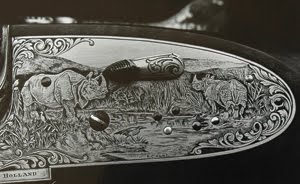
Bhutan - A King’s Gun


17 April, 2011 - A Holland & Holland gun is considered as among the finest of modern times. It is known for its brilliant craftsmanship and today is one of the world’s most expensive handcrafted sports gun.

There is one such gun in Bhutan. It is a .458 double barrel. With engravings of the big game animals of Bhutan, it is the only of its kind and now worth more than £ 80,000.

The fourth king received it as his coronation gift in 1974. The managing director of the gun company, Malcolm Lyell, travelled from London to personally offer it. Lyell’s handwritten notes says, “The official day for present giving was Tuesday, June 4th but the King couldn’t wait! We were summoned the day before and presented it to him in the Royal Cottage.”

The third King, Jigme Dorji Wangchuck, had ordered the gun two years earlier in 1972, before he passed away. The third king first met Lyell in 1949, in London at the Westley Richards’s gun showroom where, as Crown Prince, he had gone to buy hunting rifles. Ever since, the two gun enthusiasts maintained their friendship.

The doyen of the London gun trade visited Bhutan as the guest of the king. He first came in 1970 and was one of the earliest to trek extensively in our northern mountains. Using hand-drawn maps of botanist Frank Ludlow, Lyell and his family made four such expeditions into the then largely unknown northern mountains. Lyell was a game enthusiast and keen on wild animals and, during his treks, saw and recorded many of these wild animals namely, the blue sheep, blue bear, wild yaks, takins, and snow leopards.

The Gun
In 1972, after returning from one such trip, Lyell had the gun of our king engraved with the large game animals that he saw during his treks in Bhutan.

For example, the right lock plate has an engraving of a group of takins - the national animal. The fore feet and body of the lynx are also just visible on the “fence” (standing breach at the left hand end of the barrel).

The left lock has an engraving of the Indian rhinoceros, which are found in the foothills of Manas. The tail and back of the snow leopard are scarcely visible on the “fence”. A Tibetan antelope, found along the Chumbi valley border, is engraved on the trigger guard, and the grip cap has an engraving of a blue sheep or bhurel.

History
Crafting a Holland & Holland gun took a long time and this became a setback as the soaring inflation of the 1970s cut into the company’s profit.

To sustain the business, Lyell started to craft presentation guns. These guns were fully functional but, because of the intricate artwork, enhanced its costs, and hence inflation did not affect its value.

Inspired by the gun makers of the 18th century, Lyell came up with the rococo gun, with deep engravings in gold and silver of classical motifs, such as Diana the huntress.

In 1966, the Shooting Times described it as the finest gun of modern times and, from then, Lyell produced a series entitled “Products of Excellence”. These included such guns as the Set of Five; beautifully matched shotguns in every gauge from 12 bore to .410; the African hunters series of big game rifles; and finally the Saurian four bore, decorated with scenes of prehistoric life.

Almost two decades later, after the launch of the “product of excellence”, in 1972, our late king ordered the .458 double barrel gun, which he never saw. In the memory of the late king, Lyell had it engraved with the big game animals of Bhutan and presented it to our fourth king during his coronation. Malcolm Lyell died early this year.

Contributed by Tshering Tashi

http://www.kuenselonline.com

Tag : bhutan,king,gun

Thursday, 15 May 2008

Bhutan and India: History stays alive


14 May, 2008 - Prime Minister Dr Manmohan Singh of India is visiting Bhutan in one of the most historic years of the kingdom’s modern history. Bhutan and India have planned a string of historical events for the two-day visit.

India’s ambassador to Bhutan, Mr Sudhir Vyas, said that the government of India considered it a “singular honour” that Dr Manmohan Singh has been asked to address the first joint session of the Bhutanese parliament on May 17. India was honoured and delighted that the prime minister was visiting Bhutan during a year when the kingdom was celebrating the centenary of the monarchy, the coronation of the fifth Druk Gyalpo, the adoption of the constitution, and the installation of the very first elected government in Bhutan.

The visit also comes exactly 50 years after Prime Minister Jawaharlal Nehru came to Bhutan. “We are attaching particular importance and significance to this visit, both in symbolic as well as in substantive terms,” said Ambassador Vyas. “Just as we had a meeting of minds in 1958 between the third King and Nehru, we are looking at developing a perspective for the future during this visit. It’s tremendously exciting and we are looking at it with enormous anticipation.”

Dr Manmohan Singh will receive an audience with His Majesty the King and with His Majesty the fourth Druk Gyalpo. He will dedicate the Tala hydroelectric project (THP) to the people of Bhutan and India and unveil a foundation stone for 1095 MW Punatsangchu-1 hydroelectric project (P-1HP), which is under construction.

He will meet the Bhutanese prime minister, Lyonchhen Jigmi Y Thinley. “Moving forward under a democratic dispensation, what better moment for the leaders of the two democracies – Bhutan, an emerging democracy, and India, an established one - to put their minds together and try to develop some kind of a vision for the coming decades?” said the Ambassador.

The two governments will discuss a broad agenda that will include Bhutan’s 10th Plan. It is likely that the government of India will announce an indicative amount of assistance for the 10th Plan period. “It is really a reaffirmation of our relationship and a look towards the future,” Ambassador Vyas told Kuensel. “It has always been a our approach to align our cooperation efforts with Bhutan’s own priorities and its own chosen direction of development. And that will be the guiding principle on which our cooperation will be based.”

As Bhutan’s main development partner, India provides assistance for nearly all sections of socio-development, particularly for hydropower development. With the Chukha project, the Kurichu project, and Tala project completed, Bhutan produces about 1,500 MW of hydropower and the power projects are the main sources of national revenue.

Dr Manmohan Singh will be the fifth Indian prime minister to visit Bhutan. Prime minister Nehru’s visit was followed by Mrs Indira Gandhi in 1968, during which the Thimphu-Phuentsholing highway was inaugurated. She was again in Bhutan in 1972 for the cremation of the third Druk Gyalpo. Mr Rajiv Gandhi visited Bhutan in 1985, and 1988. Mr Narasimha Rao visited Bhutan in 1993.

The prime minister will be accompanied by the national security advisor, Mr M K Narayanan, his principal secretary, Mr T K Nair, foreign secretary, Mr Shivshankar Menon, and other senior officials.

Lyonchhen Jigmi Thinley said that, apart from the fact that it was the golden jubilee anniversary of Prime Minister Nehru’s visit, Dr Manmohan Singh’s visit was particularly significant because he was the first head of government to visit Bhutan after the establishment of democracy. He said that India had reason to be satisfied and proud of Bhutan’s successful transition from Monarchy to a full-fledged democracy because, as the closest friend and neighbour, it had supported and encouraged His Majesty the fourth Druk Gyalpo during the transition process.

Lyonchhen Jigmi Thinley said that the Indian prime minister’s visit also coincided with the beginning of the 10th Plan, during which the DPT government intended to raise and engage in programmes and activities that would deepen the economic and trade relations between the two countries.

“We are particularly pleased and happy that we’re able to receive the prime minister of our best friend and neighbour to address the first joint sitting of the parliament,” he said. “The visit will give the new leadership in Bhutan, and myself in particular, the opportunity to discuss and share our perceptions on regional and global issues and create room for further collaboration.”

http://www.kuenselonline.com

Tuesday, 11 November 2008

Bhutan : HIS MAJESTY’S CORONATION ADDRESS


It is with immense joy that we are gathered together on this most auspicious day. In these last 100 years the dreams and aspirations of our forefathers and the vision of our Kings have been fulfilled beyond all expectations. The wise and selfless leadership of our kings, the sacrifice and hard work of generations of Bhutanese and the special bond between the People and King have given us this unique and special nation – a jewel of the earth.

Two years ago, at a time of profound change I came onto the Throne as a young King. You, my people, in the spirit of generations past, worked with me with complete faith and gave me your wholehearted cooperation and goodwill. Thus, in these two short years while we have taken gigantic steps towards strengthening our nation, we have done so in a calm, deliberate manner in complete harmony. It is with great pride that we stand as a new democracy, having successfully completed an unprecedented and historic transition.

Yet we must always remember that as our country, in these changing times finds immense new challenges and opportunities, whatever work we do, whatever goals we have – and no matter how these may change in this changing world – ultimately without peace, security and happiness we have nothing. That is the essence of the philosophy of Gross National Happiness. Our most important goal is the peace and happiness of our people and the security and sovereignty of the nation.

Our generation of Bhutanese have been gifted a strong, dynamic nation by our forefathers. I am confident that as long as we are willing to work with their commitment and dedication and follow their example we can bring greater peace, happiness and prosperity to our country.

I am confident because I know the worth and character of our people. You are the true jewel of this nation. As citizens of a spiritual land you treasure the qualities of a good human being – honesty, kindness, charity, integrity, unity, respect for our culture and traditions, love for our country and for God. Throughout our history our parents have upheld these values and placed the common good above the self.

My deepest concern is that as the world changes we may lose these fundamental values on which rest our character as a nation and people. It is critical that we are able to recognize Bhutanese character irrespective of how far we look back into the past or into the future. The Bhutan we see is vastly different - unrecognizable even - when compared to the Bhutan in the time of our first King. Yet, the character of our people and the nature of our fundamental values have remained unchanged. Henceforth, as even more dramatic changes transform the world and our nation, as long as we continue to pursue the simple and timeless goal of being good human beings, and as long as we strive to build a nation that stands for everything that is good, we can ensure that our future generations for hundreds of years will live in happiness and peace.

It is not because I am King that I ask these of you. Destiny has put me here. It is with immense gratitude and humility that at this young age, I assume the sacred duty to serve a special people and country. Throughout my reign I will never rule you as a King. I will protect you as a parent, care for you as a brother and serve you as a son. I shall give you everything and keep nothing; I shall live such a life as a good human being that you may find it worthy to serve as an example for your children; I have no personal goals other than to fulfill your hopes and aspirations. I shall always serve you, day and night, in the spirit of kindness, justice and equality. As the king of a Buddhist nation, my duty is not only to ensure your happiness today but to create the fertile ground from which you may gain the fruits of spiritual pursuit and attain good Karma.

This is how I shall serve you as King.

I cannot end without addressing our most important citizens - our youth. The future of our nation depends on the worth, capabilities and motivation of today’s youth. Therefore, I will not rest until I have given you the inspiration, knowledge and skills so that you will not only fulfill your own aspirations but be of immense worth to the nation. This is my sacred duty. A strong motivated young Bhutan guarantees a strong bright future.

The future is neither unseen nor unknown. It is what we make of it. What work we do with our two hands today will shape the future of our nation. Our children’s tomorrow has to be created by us today.

I end with a prayer for Bhutan - that the sun of peace and happiness may forever shine on our people. I also pray that while I am but King of a small Himalayan nation, I may in my time be able to do much to promote the greater wellbeing and happiness of all people in this world – of all sentient beings.

www.bbs.com.bt

Monday, 22 December 2008

Bhutan : Six honoured for service to nation

20 December, 2008 - “As King it is my duty to recognise people, who have served their fellow countrymen and nation in an exceptional way. It does not matter who you are, whether you are from rural or urban Bhutan or from the private sector or government. In the end all that matters is your love and service for our people and country. It is my hope that, henceforth, every one of you will strive to merit these awards.”

For six Bhutanese citizens, December 17, 2008 turned out to be an unforgettable day. In a surprise announcement, during the royal National Day address, His Majesty the King awarded the Druk Wangyal medal to the prime minister, Lyonchhoen Jigmi Y. Thinley, and the chief justice, Lyonpo Sonam Tobgye.

“Jigmi Thinley and Sonam Tobgye, throughout their careers, have been motivated by service to the nation, regardless of what responsibilities they held,” His Majesty said. “They have excelled in carrying out their duties in each position and their devotion to the country is exemplary. Even today, under a new democratic system, they continue to serve the nation in important positions, that they have earned through their own merit.”

Lyonchhoen Jigmi Thinley said that he was greatly honoured and humbled. “If I have pleased His Majesty and the government, it is because of the opportunities I’ve been bestowed by them,” he said. “I accept this not only as His Majesty’s recognition of my services but also collectively on behalf of my colleagues, the new government. I recognise this honour as His Majesty’s expectations, the kind of service that he expects from every government employee. Therefore, I think it’s also with expectations of similar service hereafter.”

Chief Justice Lyonpo Sonam Tobgye said that it was a legitimate aspiration for every person to work for recognition but the Druk Wangyal “elated, inspired, and humbled” him. “It is my lifetime achievement that His Majesty most graciously recognised and my family will always cherish this honour,” he said. “I had many doubts and difficulties and His Majesty through this medal redeemed my doubts and encouraged me to do more. It is my belief that the royal government of Bhutan is not deaf and blind, particularly His Majesty will always see through his compassionate eyes the services rendered by every person in the country, regardless of his or her status, background or place.”

His Majesty awarded four Druk Thuksey medals.

Dasho Kunzang Wangdi, Chief Election Commissioner, received the Druk Thuksey for his “personal integrity and hard work and for the combined effort of the officials of the Election Commission of Bhutan, various government agencies, local government and the armed forces in preparing for and conducting successful general elections at the start of democracy.”

Neten Zangmo, Chairperson of the Anti-Corruption Commission was granted the Druk Thuksey for “carrying out her duties as head of the Anti-Corruption Commission without fear or favour.” His Majesty said that, at this phase in the growth of democracy, the ACC must work to prevent the spread of one of the biggest threats to Bhutan’s success. His Majesty pledged his own wholehearted support to the ACC. Neten Zangmo will receive the Red Scarf from His Majesty.

Dasho Pema Wangchuk, International Boundaries Secretary, was awarded the Druk Thuksey for his “long, consistent and fruitful service during the reign of two kings with sincerity, dedication and humility.”

Dasho Pema Wangchen, Secretary to the Fourth Druk Gyalpo, received the Druk Thuksey for his “commitment and dedication with which he had served a special King as he led the nation over 34 years.”

Dasho Kunzang Wangdi said the medal reaffirmed that the election commission had lived up to the expectations of the Fourth King in conducting the elections successfully. “We are honored by the faith and trust of His Majesty the fifth King on the officials to conduct the future elections more professionally.”

“I consider myself very lucky because my humble contributions to the nation were appreciated on such a great day, when we were celebrating 100 years of monarchy and people were rejoicing the coronation of the Fifth King,” he said. “It was an appreciation for past effort but, with this medal, there’s a challenge ahead of me and my colleagues to fulfill the expectations of His Majesty for future elections.”

Dasho Pema Wangchuk, who received the Red Scarf from the third Druk Gyalpo, said that, when His Majesty commended his consistent service, it was the biggest compliment for him. “I nearly cried.”

“The medal means a lot to me,” he said, “because it’s a reward for my 36 years of service with the royal government, that is, 10 years with the late Majesty, 34 years with the fourth Druk Gyalpo, and now two years with the fifth Druk Gyalpo. “I always gave my best, serving with a clear conscience, as the King is always for the people.”

Dasho Pema Wangchen, the secretary of fourth Druk Gyalpo, joined the royal service in 1970. “The honour bestowed upon me by the Druk Gyalpo on the Centenary National Day was totally unexpected and took me by surprise,” he said. “I was deeply overwhelmed when my name was announced and I was commanded by His Majesty the King to come to the podium to receive the medal in front of the nation. I consider myself very fortunate for the privilege I have had to serve such a great King.”

For Neten Zangmo, it was a “very, very, big, big, big, big surprise!”. “It symbolised the beginning of the end of corruption,” she told Kuensel. “This is a very strong message that His Majesty is sending to every Bhutanese, to every corner of this country - that corruption has to be fought resolutely and that corruption cannot be tolerated.”

“The medal is a great motivation and inspiration for ACC and myself. We’ll continue to work harder … As far as we are concerned, we’ll fight corruption no matter whoever is in it.” Referring to the retroactive law used against various ACC cases, she said: “Why is that an issue when big people are involved and not when small people are involved?”

Her message to politicians and bureaucrats: “Stop talking and start practising. Even when a new government has come up, it’s business as usual and things aren’t changing at all, as they should. The culture of indifference persists.”

His Majesty said that, while awards went to individuals, it did not mean that the rest had not served their country. He said that, in fact, the people of Bhutan were united in their love of country and such awards were meant precisely to preserve this unique strength of Bhutan.

KUENSEL REPORTERS

http://www.kuenselonline.com

Monday, 24 March 2008

Historic polls set to begin as Bhutan ends royal rule

THIMPHU (AFP) - Voting began in the small Himalayan nation of Bhutan Monday, in elections that will select the country's first ever democratic government and mark the end of absolute royal rule by the revered Wangchuk dynasty.

Voting was began at 09:00 am (0300 GMT) for 47 members for the lower house, with the People's Democratic Party (PDP) and the Druk Phuensum Tshogpa (DPT) or Bhutan United Party locked in a tight race for power.

The country's young Oxford-educated King Jigme Khesar Namgyel Wangchuk made a strong pitch at the weekend for his subjects -- many of whom have been reluctant to bring in democracy -- to cast their vote judiciously.

"This election is not about choosing a winner from among two candidates or two parties. This election and the democracy that we will build are the result of the sacrifice and hard work of generations of Bhutanese people," he said.

Over 318,000 of the nation's 670,000 people were eligible to vote for the two parties, which have made similar promises to boost growth and develop roads and other infrastructure, making it a tough choice for many voters.

Polling stations were to close at 5:00 pm (1100 GMT) and the preliminary results were expected within hours, transforming Bhutan into the world's newest democracy.

Final official results would be declared on Tuesday in the country, which is sandwiched between India and China and has been called a "Himalayan Eden" because of its breathtaking mountain scenery and clean air.

"People are going to vote on the basis of the candidate's image and past performance, and also on the basis of personal ties," said Gopilal Acharya, editor of private newspaper Bhutan Times.

The kingdom's move to democracy began in 2001 when former king Jigme Singye Wangchuk handed over daily government to a council of ministers and finally stepped down in favour of his son in late 2006.

Since then, both father and son travelled tirelessly around the state to explain to its people why the nation should embrace democracy.

"The former king said, 'Today you have a good king, but what if you have a bad king tomorrow', " said Kinley Dorji, managing director of the national Kuensel newspaper. "The argument was irrefutable."

The former king was most famous for conceiving the concept of gross national happiness as yardstick to measure the isolated nation's wellbeing.

Officials said they expected more than 70 percent turnout after tepid responses in last year's mock polls to familiarise voters with the process, and recent elections for the upper house.

The political parties have put immense pressure on people to vote. So they will turn up in huge numbers," said chief election commissioner Kunzang Wangdi.

People can cast their vote only in their home towns so thousands took leave to go to their remote villages. Streets in capital Thimphu were deserted over the weekend and many shops and businesses were closed.

"Because of this vote, many people are going home after years," said Tashi Wangdi, editor-in-chief of Bhutan Observer newspaper.

Helicopters dropped election guidelines to inaccessible locations while mules carried voting apparatus to ballot stations.

Both the parties are led by two-time former prime ministers, and are heavily stacked with experienced bureaucrats.

The PDP is headed by Sangay Ngedup, who is the brother of the former king's four queens -- all sisters, and is said to enjoy wide support in rural areas.

DPT head Jigmi Thinley is described as sharp and sophisticated, and is known for his zeal for preserving of the country's culture.

Security was tightened after several small bombings blamed on communist rebels operating from Nepal over the past few months.

Tens of thousands of ethnic Nepalese fled from southern Bhutan to Nepal after a cultural campaign to encourage the use of Bhutan's national language and dress, and have been living in refugee camps.

http://news.yahoo.com

Saturday, 7 June 2008

Bhutan : The Druk Wangyal Lhakhang


7 June, 2008 - The Druk Gyalpo personifies benevolence. As a Dharma King, he is responsible for the governance of his kingdom, for the well-being of all his subjects, and for the preservation of the natural environment. There are times, however, when his kingdom and people are threatened. Then he assumes the compassionate responsibility of the supreme protector to face and overcome every challenge.

Such a moment of sacred transition and triumph has been embodied in the Druk Wangyal Lhakhang, which now stands on the crest of Dochu-la. Overlooking the unique spiral of 108 Khangzang Wangyal Chhortens, the serene lhakhang, dedicated to “Glorious Victory”, sits like the core of a living mandala formed by the great snow-clad northern mountain range that shimmers in the distance.

Her Majesty Ashi Dorji Wangmo Wangchuck has achieved a fine blend of history and mythology in the construction of The Druk Wangyal Lhakhang to honour His Majesty the fourth Druk Gyalpo, Jigme Singye Wangchuck. The past and future appear to merge in the details of the lhakhang that tells the story of a supreme warrior figure whose vision pierces the distant future.

On June 6, the third day of the fifth Bhutanese month, His Majesty the King, His Majesty the fourth Druk Gyalpo, the royal family, and dignitaries from all sections of Bhutanese society attended the consecration of the Druk Wangyal Lhakhang. The ceremony was conducted by His Holiness the Je Khenpo, Trulku Jigme Chhoeda, and Gyalse Trulku Jigme Tenzin Wangpo to invoke blessings and the essence of the wisdom of Dragmar (dedicated to Guru Lohita Rudra) and Tshepame (prayer or offering to the Buddha Amitayus) into the lhakhang and the sacred images.

The five lopons of the dratshang performed the Zhi Wang Dra Jinseg (fire offerings to promote peace and harmony and to ensure power and unity) in the four directions for two days. In a special moment, on June 6, the large gathering of people joined Their Majesties and the royal family in circumambulating the lhakhang to celebrate the empowerment of the deities and images in the lhakhang. It was a celebration of Bhutan’s sacred tradition.

His Holiness the Je Khenpo said that the lhakhang, which was constructed under the patronage of Her Majesty Ashi Dorji Wangmo Wangchuck, truly represented a symbol of appreciation, loyalty, dedication, love and a tribute and monument to the selfless service and visionary leadership of His Majesty the Fourth Druk Gyalpo, Jigme Singye Wangchuck. “The Druk Wangyal honours His Majesty for his achievements, which will be remembered by the Bhutanese for all time to come,” said His Holiness.

The lhakhang is a beautiful edifice in the traditional Zangto Pelri design. The contours of the lush ridges around Dochula merge to hold it up like a special pinnacle. Inside, every inch of space, from a jewel-studded floor to the intricately painted ceiling, is covered in subtly ornate artwork. The walls are alive with ethereal images.

An attic lhakhang is the Rigsum Goenpo (Chenrizig, Jamyang and Chana Dorji) with mural paintings of Rigsum Goenpo, Decho Khorlodom (Chakrasamvara), Duesum Sangay (past, present and future Buddhas) and Tandin (deity or Hyagriva).

The spirit of the Druk Wangyal Lhakhang, however, is that it conveys a vivid feel of Bhutan through the ages, as deities and saints revealed their dreams and predictions and destined the unfolding of a unique story in human history.

Although the chhoe-ku-troe-sum images of the Sangay Tempa, Guru Rinpoche, and Zhabdrung Ngawang Namgyal are found in many Bhutanese lhakhangs, master craftsmen say that this one has achieved “perfection”. It does not take an expert to experience the “awakened compassion” in the flawless precision of the three giant images that represent the realization of the Buddha, the sanctification of the Himalayas by Guru Rinpoche, and the unification of Bhutan by Zhabdrung Ngawang Namgyal.

According to the master sculptor, Karma, who reflects on his work, Her Majesty Ashi Dorji Wangmo “inspired the best performance of his life”. The three extraordinarily beautiful images will leave generations of Bhutanese people grateful for the fact that there is such inspiration in Bhutan and proud that there is such talent among the Bhutanese.

According to Tenso Lapon, Dasho Wangchuk, who supervised the construction, there is no other lhakhang quite like Druk Wangyal Lhakhang. The essence of this uniqueness is a two-tiered museum gallery, that brings to life Bhutan’s ancient spiritual legacy and the reign of the Wangchuck dynasty, which is widely acknowledged as an era of political stability and economic prosperity.

The ground floor gallery is an action-packed depiction of the 100 deeds of the Buddha. The graphic artwork features unique images in terms of sacred paintings like the Paksam Thrishing, which depicts the life and glory of the Buddha. His Holiness the Je Khenpo said that such paintings did not exist in any dzongs, monasteries and temples in Bhutan.

A mezzanine gallery, not found in other Bhutanese lhakhangs, depicts the story of the Wangchuck dynasty in aesthetic splendour. A genealogical mirror traces the royal lineage that identifies His Majesty King Jigme Singye Wangchuck as the 18th direct descendant of Pema Lingpa. The gallery draws on scriptures, mythological accounts, historical texts, oral stories, and artistic creativity to narrate the historical details from the time of Jigme Namgyal.

The artist, Dasho Karma Ura, said that there could not be another patron, who would be as generous and quality conscious as Her Majesty. “This is the best that one could think of doing in this life,” he said.

Running across three adjacent walls, the murals depict highlights of the century. The central images of the three panels are the enthronement of Gongsar Ugyen Wangchuck, the enthronement of His Majesty Jigme Singye Wangchuck, and His Majesty during the military action against Indian militants in 2003.

His Majesty Gongsar Ugyen Wangchuck comes through as a master strategist and diplomat and a man of strong spiritual faith. He is seen negotiating the delicate historic agreement between the British and the Lhasa government. His Majesty Jigme Wangchuck is depicted as an active outdoor man who is fond of sports. As a statesman he also initiated the security forces, education, and reduced woola for the people. His Majesty Jigme Dorji Wangchuck is seen with Prime Minister Jawaharlal Nehru in 1958, the dawn of Bhutan’s modern era. Images show His Majesty envisioning infrastructure, establishing the National Assembly, codifying laws, and abolishing serfdom.

His Majesty Jigme Singye Wangchuck is the enlightened Monarch, whose vision of good governance carried Bhutan into the new century as a nation on a profound path to development and change. Having enacted 87 of the 100 or so existing Bhutanese laws, His Majesty greatly strengthened the rule of law. His Majesty also bestowed on his people the essence of great governance that led to democratic rule. Depicted as the possessor of wisdom in all directions, His Majesty sets the stage for future development in every sphere of human progress.

His Majesty Jigme Singye Wangchuck is the soul of the Druk Wangyal Lhakhang, a memorial to the Druk Gyalpo’s service to his nation and people. He is depicted as the protector and psychological strength during the 2003 operations to flush out the Indian militants, who were illegally camped on Bhutanese soil. Having demolished the obstacles and negativity that the kingdom faced, His Majesty expressed his compassion in the lighting of butter lamps, not in the celebration of victory.

His Majesty the King, Jigme Khesar Namgyel Wangchuck, is present as the Trongsa Penlop, against the background of Oxford University, and glimpses of the future. The last panel carries a portrait of the royal family.

His Majesty King Jigme Singye Wangchuck’s presence pulsates in the goenkhang as the protector of peace in the land and its spiritual legacy. The Monarch is portrayed with the Tag-Seng-Chung-Druk (auspicious symbols of the tiger, lion, garuda and dragon), leading armed forces to the battlefield.

The goenkhang is also adorned with exquisite images of the goen-chamdrol-sum (Goenpo, Pelden Lham and the raven-headed Lagoen), the kingdom’s protector deities. They are flanked by life-size statues of Tshering Chhenga (five sister deities).

The lhakhang museum is a monument of love. It was conceived, planned, and funded by Her Majesty Ashi Dorji Wangmo Wangchuck, who personally identified the concepts that adorn the walls. The creativity and innovation that the artwork displays, by blending in modern concepts, is likely to inspire change and innovation in Bhutanese art traditions.

The lhakhang represents aestheticism at its best, with a coherent vision. In complete harmony with the pristine surroundings, the architectural work and craftsmanship preserves tradition at its best, from massive flagstones to broad floor planks to the trees and plants that enrich the immediate surroundings.

The hundreds of architects, engineers, artisans, and workers say that it was a blessing to be involved in the construction of the lhakhang. They had been able to see a lifetime achievement, inspired by Her Majesty’s intuitive ideas and vision and unremitting attention to detail. “There was not a single person who was not blessed by the experience,” one worker told Kuensel. “It changed our hearts forever. I’ve never known anything like this in 30 years of construction.”

“Inside this magnificent monument are also many nangtens and sacred images not found in other lhakhangs,” His Holiness said. “They include the murals of paksam thrishing, the imagery of the Bhutanese monarchs, and the victorious return of His Majesty the fourth Druk Gyalpo after the 2003 military operations.”

The historical and spiritual ridge of Dochula, blessed by Zhabdrung Ngawang Namgyal, Terton Drugda, Drukpa Kuenley, and other spiritual personalities, has thus become a nye for all Bhutanese travellers. Sanctified by the Druk Wangyal Lhakhang, the ridge is a blessing for every person who crosses the pass. The museum lhakhang itself is a memorial for posterity. It represents a journey through Bhutanese history. It is a journey through life. And it is a monument to glorious and selfless service to the nation by a beloved Monarch.

www.bbs.com.bt


Tuesday, 11 November 2008

His Majesty King Jigme Khesar crowned 5th Druk Gyalpo


November 8: The sun of happiness was shining brightly all over Bhutan as His Majesty Jigme Khesar Namgyel Wangchuck was crowned as the Fifth Druk Gyalpo in the sacrosanct Chamber of the Golden Throne in Tashichhodzong on November 6.

The Coronation of His Majesty Jigme Khesar Namgyel Wangchuck is a momentous historic event, rare and unique as it was His Majesty the Fourth Druk Gyalpo who Crowned His Majesty Jigme Khesar Namgyel Wangchuck as the Fifth Hereditary King of Bhutan.

The ceremony began early in the morning with the monks of the Zhung Dratshang performing Lhasang Tashi Raykong or incense offering to the guardian deities in the royal altar room adjacent to the chamber of the Golden Throne.

This was followed by the Pel Dechog Khorlo Dompi Soong Chhoe or the invocation of the tutelary deity at the Kuenra. Three sacred thongdroels of the Buddha and Bodhisattvas were also unfurled.

His Majesty the King was escorted from the Dechencholing palace by the Prime Minister Lyonchhen Jigmi Y. Thinley, the Works and Human Settlement Minister Lyonpo Yeshey Zimba and Education Minister Lyonpo Thakur Singh Powdyel to the Tashichhodzong.

At the main ceremonial gate at Dechen Zam, His Majesty was received by the Chief Justice Lyonpo Sonam Tobgay, Speaker Jigme Tshultim, opposition leader Tshering Tobgay, the Chairperson of the National Council Namgay Penjore, cabinet ministers and senior government officials. His Majesty was escorted into the Tashichhodzong in an elaborate chhipdrel procession.

At the Tashichhodzong, His Majesty was received by His Majesty the fourth Druk Gyalpo and His Holiness the Je Khenpo. His Majesty was escorted to the dais where he stood facing the Guru Thongdroel. His Majesty was presented the dance of the heroes by the Bji Bi Pawos. Following that marchhang was offered by the Royal Chamberlain Dasho Penjore, the Minister of Home and Cultural Affairs Lyonpo Minjur Dorji and the venerable Tshugla Lopen of the Zhung Dratshang Lopen Samten Dorji.

In the throne room, His Majesty stood facing His Majesty the Fourth Druk Gyalpo and His Holiness the Je Khenpo. His Holiness the Je Khenpo and the monks recited the Coronation sutras. His Holiness then proceeded to the altar, raised the Raven Crown from the altar with tashi khaddar and delivered it to His Majesty the Fourth Druk Gyalpo.

As the coronation serda commenced both within and outside the chamber, His Majesty the King ascended the pedestal in front of the supreme Golden Throne. His Majesty the Fourth Druk Gyalpo then crowned His Majesty Jigme Khesar Namgyel Wangchuck as the fifth hereditary king of Bhutan. His Majesty the King then ascended the Supreme Golden Throne.

This was followed by Zhug-drel Phuensum Tshogpi and marchang ceremony.

His Majesty the King was then offered the symbols of Ku, Soong, Thuk, Yonten and Thrinley or the body, speech, mind, qualities and deeds.

His Holiness the Je Khenpo made offerings of empowerment to His Majesty the King. It began with the offering of Gyalse Na-duen or the seven precious objects of the Universal Emperor, followed by the offering of Tashi Zegye or the eight auspicious elements.

The Tashi Ngasoel ceremony in the grand chamber of the supreme golden throne concluded with the recitation of Moenlam Drubgyal and Deshey Toenpa.

The Secretary to His Majesty the King then conveyed the Crown to altar in the kuenrey.

Following this, His Majesty the 4th Druk Gyalpo, offered thridar to His Majesty the King followed by His Holiness the Je Khenpo, the President of India, Her Majesty the Royal Grand Mother, their Majesties the Queen Mothers, members of the Royal Family, the Prime Minister and the dignitaries present in the throne room.

www.bbs.com.bt

Thursday, 13 October 2011

Bhutan - The Royal Matrimony, The Queen is Crowned

The Royal Wedding ceremony of His Majesty the King Jigme Khesar Namgyel Wangchuck took place in the Puna Dewachen Phodrang in Punakha. Jetsun Pema was sanctified as the Queen of Kingdom of Bhutan by His Majesty the King.

The ceremony began at 4 am with the initiation of soong-chhoe prayers at the Marchen Lhakhang and Kuenra of the Punakha Dzong. His Majesty the King, escorted by the sacred retinue, arrived at the Dzong from the Royal Lingkha and lit a golden lamp and offered prayers before the Thongdroel of Zhabdrung in the first courtyard of the Dzong.

The Royal Bride was led in chhipdrel procession into the Dzong, where she lit a golden lamp before the Thongdroel, and exchanged Tashi Jel-Dhar with His Majesty the King.


The Raven Crown and the crown for the Queen of Bhutan were brought out from the Most Holy Macchen Lhakhang, along with a Golden Bumpa and the sacred five coloured dhar.

The Fourth Druk Gyalpo bestowed the sacred dhar upon the Royal Bride, sanctifying the Royal Wedding.

In the Kuenrey, The Royal Bride offered the ambrosia of eternal life, signifying her devotion to the glorious continuity of the Wangchuck Dynasty, from the Golden Bumpa, to His Majesty the King.

His Majesty then bestowed the crown of the Druk Gyal-tsuen to the Royal Bride, and Ashi Jetsun Pema, now as Druk Gyaltshuen Jetsun Pema Wangchuck, ascended to the throne of the Queen of Bhutan, to the left of His Majesty the King.

The ceremony at the Kunrey ended with the offering of Tashi Nga Soel, symbolic offerings to their Majesties the Queen and King of Bhutan. His Holiness the Je Khenpo, The Fourth Druk Gyalpo, and members of the Royal Family and guests offered tashi khadar to the royal couple.

Their Majesties the King and Queen then joined the people of Punakha and guests in a public celebration outside the dzong.

His Majesty granted tokha to the people gathered at the celebration ground.

Wednesday, 10 December 2008

Bhutan : A tribute in appreciation

10 December, 2008 - The serrated ridges around Trongsa form a vast rim from where hill slopes run sharply to the valley floor. The slopes are covered by a lush forest of evergreen and seasonal colours. Numerous white waterfalls streak the hillsides and drop into the Mangdue Chhu, which rushes down to the great plains of India. At the centre of this massive natural cradle sits the majestic Trongsa Dzong, crafted from a vision of Palden Lhamo.

This was where Bhutan’s Monarchy was born. For centuries the dzong was a centre of religious and political evolution and now stands as one of the greatest monuments in the land.

High above the valley, at a strategic vantage point over Trongsa Dzong, rises its watchtower, the Ta Dzong. This “tower of Trongsa” now tells the stories of the dzong and the valley that it has watched over for centuries.

His Majesty the King inaugurates the Ta Dzong today as a museum dedicated to the Wangchuck dynasty, landmarking yet another significant event as the nation celebrates 100 years of the Monarchy.

The Ta Dzong, a cylindrical stone structure rising five storeys, was built in 1652 by Chogyal Minjur Tempa, a task entrusted to him by Zhabdrung Ngawang Namgyal. After more than 350 years, it has been resurrected into a classy museum, that represents a tasteful blend of tradition and modernity.

The central Utse structure is connected to two four-storey towers by multi-floor wings. A total of 11 galleries sit comfortably at split-levels over five floors to a rooftop that functions as a viewing gallery. Overall, the tower, that kept enemies at bay, exudes a feel of history as well as a sense of change.

At the heart of the museum sits the Raven Crown worn by Gongsar Ugyen Wangchuck. The Crown symbolises the triumph of the Bhutanese Monarchy and the supreme protector role of the Druk Gyalpo. The third floor of the Utse is dedicated to the Wangchuck dynasty, with ceremonial and personal belongings of the Kings and Queens of Bhutan. The displays include Jigme Namgyel’s sword, Gongsar Ugyen Wanghcuck’s gho, Jigme Dorji Wangchuck’s wine flask and radio, and a full dress set of the fourth Druk Gyalpo His Majesty Jigme Singye Wangchuck.

There are 224 items on display. They include a sacred image of Sung Joenma Dorji Chang (self spoken Vajradharna), a bronze statue of Pema Lingpa, made by himself, and a number of centuries-old treasures like dance and ritual costumes and objects, ancient prayer books, paintings and scrolls, and textiles.

The Ta Dzong is a living museum and the main lhakhang in the Utse is dedicated to the Maitreya Buddha (Gyaltsab Jampa), also known as the Future Buddha). A Khesar Lhakhang is dedicated to Khesar of Ling. The tower has always been a place of retreat and there are hermits in practice, including two yogis, who are in life long meditation.

Marie Christine Weinberger, the former counsellor of the Austrian development cooperation office (ACO) in Bhutan, became a familiar figure in Trongsa through the project. It was her last project before she retired and she said that her satisfaction came from being able to help create a world class museum, that would make Trongsa, and Bhutan, more valuable and attractive for visitors.

The present counsellor, Christian Mazal, said that ACO was deeply honoured that His Majesty the King himself was inaugurating the Ta Dzong Museum. He described the museum as “a new landmark in Austria-Bhutan relations”, a project that was completed after the restoration of Trongsa Dzong. The Nu 120 million project included the improvement of the foot trail across the river to the dzong along with the Bazam foot bridge. Apart from being a place of prayer for the people, he said it would play an important role in educating the people on culture and religion, and contribute to Bhutan’s economic development as a tourist attraction.

The museum, which has been designed and rebuilt under the supervision of professional architects and restorers from Austria, is a state-of-the-art monument. Veteran Bhutanese culturists say that it is a good example for Bhutanese restorers, who have to take up similar work in future.

With the inauguration ceremony, an important element of Bhutan’s past comes alive and merges with the present to provide lessons for the future.

Lyonchoen Jigmi Y Thinley said that the restoration of the unique Ta Dzong into a museum was a tribute to five successive great Kings of Bhutan’s Monarchy. “Bhutanese officials and people have always wanted to express our deep appreciation to the dynasty, that has made all of us proud to be Bhutanese,” he said. “We’re confident of continued peace and prosperity in the knowledge that the royal dynasty will always be with us.”

Expressing his appreciation to the government of Austria for helping the people of Bhutan offer this tribute to their Kings, the prime minister said that the restoration of the Ta Dzong was also a tribute to the great builders of the past, “who were our ancestors”. “It symbolises our determination to preserve and protect our cultural heritage and our unique identity. We must not just look at creating wealth but at recognising our cultural wealth and consolidating our assets.”

The Ta Dzong is the only structure, that has been restored specifically to tribute the Wangchuck dynasty as Bhutan celebrates the centenary of the Monarchy.

By Kinley Dorji & Rinzin Wangchuk

http://www.kuenselonline.com/modules.php?name=News&file=article&sid=11605

Sunday, 23 November 2008

Bhutan : Peaceful Dragon: Textiles Arts from the Kingdom of Bhutan begins

November 22: The ancient city of Augsburg in Germany is the venue of the Exhibition of Bhutanese textiles. Entitled “Peaceful Dragon: Textiles Arts from the Kingdom of Bhutan”, the exhibition was inaugurated yesterday by Her Majesty the Queen Mother Ashi Sangay Choden Wangchuck.

Augsburg is a very old city in Germany and in fact was once upon a time a textile powerhouse. Today this picturesque city is the venue of the Exhibition of Bhutanese textiles titled- Peaceful Dragon: Textiles Arts from the Kingdom of Bhutan.

At the exhibition, visitors will get the chance to see fine specimen of Bhutanese textiles art ranging from the secular to the spiritual. Applique thangkas, royal namzas and intricately woven kiras that showcase the brilliance of Bhutan’s textile heritage and accessories like komas are on display at the museum.

The festival is being held at the Maximilian Museum. Artists and officials from the Textile Museum and the Royal Textile Academy came to Augsburg in advance to lay the ground for the exhibition.

The exhibition was inaugurated yesterday by Her Majesty the Queen Mother Ashi Sangay Choden Wangchuck. Their Royal Highness the Princes Dasho Khamsum Singye Wangchuck and Princess Ashi Euphelma Choden Wangchuck will also grace the opening of the exhibition.

The exhibition’s opening will feature traditional Bhutanese ceremonies including Chipdrel and Marchhang. Clad in colorful costumes unique to Bhutan and dressed in their tshechu best, artists from the Royal Academy of Performing Arts will perform mask dances and traditional Bhutanese songs and dances.

Our reporter Tshewang Dendup says winter in Germany and Europe at large is marked by grey skies and cold weather. The Bhutanese delegation in Germany however has been receiving warm and cordial receptions from the people of Germany.

The historic events of 2008 including the Coronation of His Majesty the Druk Gyalpo which was covered by the German media has not only created awareness of Bhutan amongst the people of Germany but also generated a lot of goodwill.

The exhibition is an international celebration of the auspicious events of the Coronation of His Majesty Jigme Khesar Namgyel Wangchuck as the Fifth Hereditary King of Bhutan, the Centenary of the Bhutanese Monarchy and the successful transition to a full fledged parliamentary democracy this year.

After its debut at the Maximilian Museum in Augsburg, the exhibition will travel to the city of Rosenheim where it will be on display from mid February to April 2009.

www.bbs.com.bt

Friday, 12 December 2008

Bhutan : His Majesty inaugurates the Trongsa Ta Dzong Museum

December 11: His Majesty the King inaugurated the Trongsa Ta Dzong Museum yesterday. The museum is dedicated to the monarchs of the kingdom.

Their Royal Highnesses Ashi Sonam Dechan Wangchuck and Ashi Kesang Choden Wangchuck were also present at the inauguration.

Though it was a cold morning, His Majesty the King and their Royal Highnesses Ashi Sonam Dechan Wangchuck and Ashi Kesang Choden Wangchuck walked from the Thruepang Palace to the Trongsa Ta Dzong museum.

Along the way, thousands of people waited in line burning aromatic herbs and incense, holding flowers and waving the national flag. His Majesty the King interacted with the people stopping every now and then to talk to the people or hold their hands.

From the Trongsa dzong, His Majesty the King was led to the Ta Dzong in traditional chipdrel procession. His Majesty the King and the Prime Minister Lyonchhen Jigmi Y. Thinley unveiled the dedication plaque at the entrance gate. Also present at the opening, Christian Mazal and Mrs Marie Christine Weinberger from the Austrian Coordination Office.

At the north tower, His Majesty the King was offered marchang and zhudrel. His Majesty the King then visited the museum galleries along with their royal highnesses, the Prime Minister, members of the parliament and other senior government officials.

The inauguration was also attended by Dzongkhag officials from Trongsa, Bumthang, Zhemgang and hundreds of people from Mangde Tsho Zhi including students.

Following the inauguration His Majesty visited the Trongsa Chhoeste Dzong. His Majesty the King also hosted a tokha for the people of Mangde-Tsho-Zhi.

Situated strategically above the Trongsa dzong, the Ta Dzong served as the watch tower for centuries. It was built by Choeje Minjur Tempa in 1652.

The museum will focus on the history of the monarchy, which had its cradle in Trongsa and the history of the Trongsa dzong.

The museum is equipped with state of the art technology and includes a media room where visitors can watch a documentary programme on the history of the monarchy.

The Ta Dzong was renovated and converted as a museum at a cost of Nu. 97 millions with funds from the Austrian government. The museum is dedicated to the coronation and centenary celebrations.

Rare and precious artifacts on display

The Ta Dzong or the Tower of Trongsa Museum was renovated as state of the art museum dedicated to the Monarchs of Bhutan. The museum has total of eleven galleries styled along the National Museum in Paro. One gallery is fully dedicated to the history of Kings of the Wangchuck dynasty.

There is also a gallery which showcases the history and the religious significance of Trongsa Chhoetse Dzong.

The 300-year-old monument will showcase some of the rare and priceless artifacts of the Kingdom. These include the statues built in the 17th century to Bhutan’s rare royal possessions.

On display were the first King’s Namza, the Raven Crown and Sword of Trongsa Penlop Jigme Namgyel and the 3rd King. A Radio presented by an American businessman to the 3rd King in the 1950s is also on display.

One of the galleries has the robe of Yongzin Ngagi Wangchuk with his Drilbu and Dorjee from the 16th century. The museum will show case over 200 artifacts which are centuries old.

The museum has total of 11 galleries styled along the National Museum in Paro.

The Ta-Dzong has two Lhakhangs – one for the legendary Gesar of Ling and the other houses the future Buddha Maitriya.

According to the Museum curator, the Ta Dzong, will serve as the educational institution through display of artifacts and exhibitions.

www.bbs.com.bt